Following the year of rollups in 2024, which brought the proliferation of L1 and L2 scaling solutions, 2025 has been marked by the industry’s shift in focus. While new chains did enter the market, with Tenderly integrating 25 chains and bringing the total number to 100+ networks, the industry has made the first monumental steps toward mainstream adoption.
Over the past year, Ethereum’s roadmap moved from rollup-centric scalability to a dual scaling strategy that brings performance improvements on the L1 itself. The Pectra upgrade had already increased blob capacity, while the Fusaka hard fork brought further blob improvements and increased gas limit. Thanks to these and other technological advancements, EVM technology has a proven track record of handling high transaction throughputs in production.
The significant improvements in the underlying technology and infrastructure have set the stage for the next era of blockchain technology. With the industry becoming more mature, networks focusing on well-defined use cases, and the underlying infrastructure handling user requests at scale, the blockchain is on the brink of powering the global economy.
Enter financial institutions and stablecoins. For the first time, the crypto market cap crossed the $4 trillion threshold. With stablecoins and digital assets gaining traction, major financial enterprises entered the industry, including Stripe, Robinhood, Revolut, and others.
The year 2025 marked the beginning of blockchain’s mainstream adoption, and Tenderly has been here to support teams building the global economy every step of the way, bridging the gap between traditional and borderless finance through unified solutions.
Powering the onchain financial rails at scale
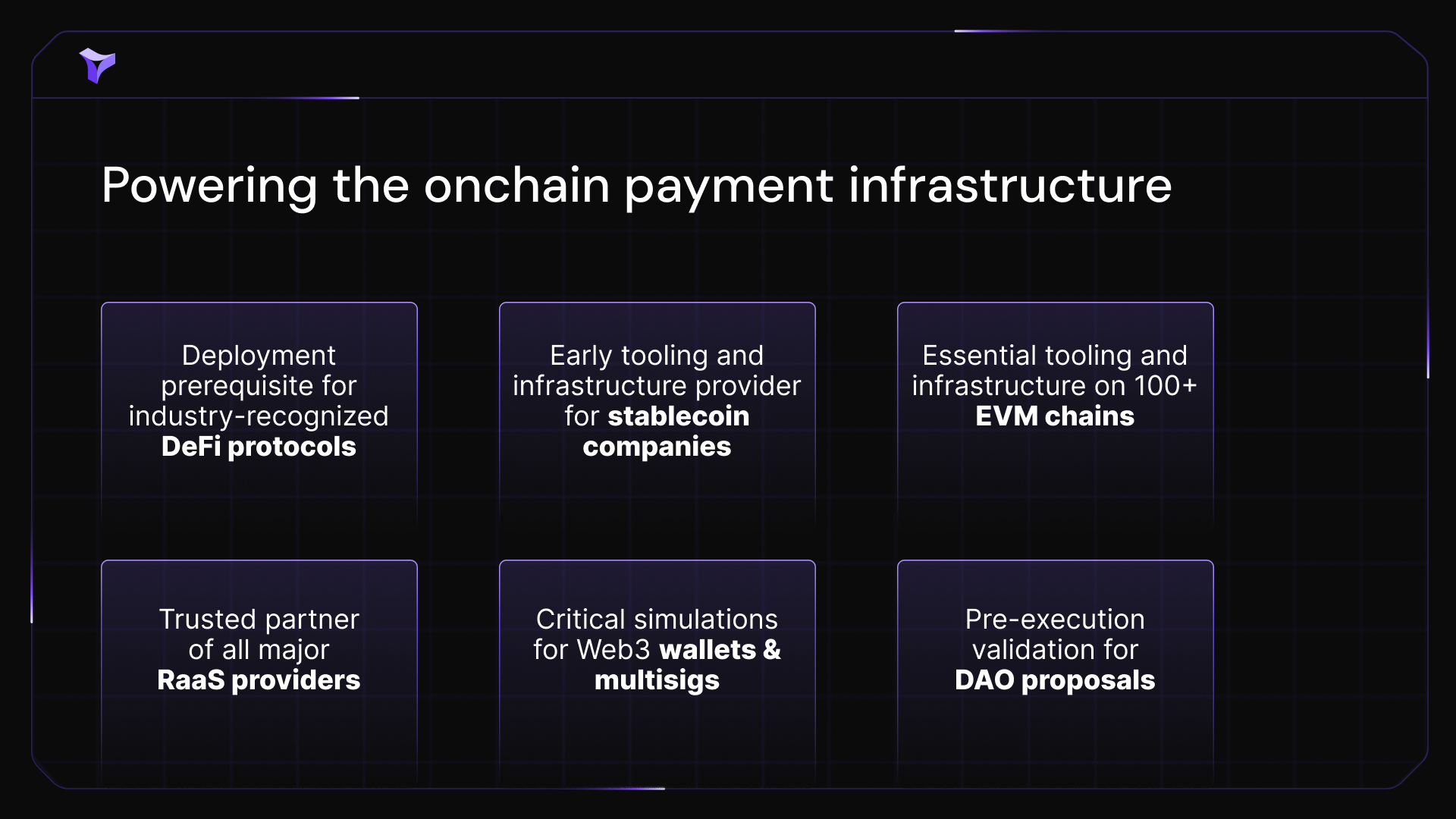
In 2025, Tenderly remains a key partner for established Web3 teams, empowering builders and end users with new functionalities for safer onchain transactions. Simultaneously, it’s been an integral infrastructure layer for new chains designed to facilitate borderless payments at scale and bring digital assets to global markets.
With an enterprise-grade infrastructure for faster development, more secure deployments, and safer onchain payments, multiple financial institutions and teams facilitating borderless payments can build and scale real-world transaction flows:
- Plasma, a purpose-built stablecoin infrastructure designed to redefine how money moves onchain, with native support for payment operations on the protocol level.
- Stable, the USDT-native network for global stablecoin payments, with USDT as the gas token, predictable fees, and enterprise-ready infrastructure.
- Tempo, Stripe’s global base layer for instant, programmable transactions, optimized for real-world financial flows.
- Aave V4 testnet for Aave Pro, a new, safe way for stablecoin trading and lending, with industry-leading interest rates.
- Ledger’s Transaction Check for real-time risk analysis and threat detection for onchain transactions, bringing security and transparency before execution.
- Safe transaction comparison and verification as an additional security measure when simulating Safe transactions using Tenderly.
From decentralized exchanges and aggregators to wallets and multisig smart accounts across the EVM ecosystem, Tenderly continues to be a critical partner and underlying infrastructure powering onchain finance and its many diverse applications.
Welcoming 25 new chains to the Tenderly ecosystem
Aiming to facilitate development, onboard key protocols and partners, and build a strong developer ecosystem, 25 EVM-compatible networks integrated Tenderly’s essential infrastructure and tools in 2025:
OP-powered chains
With several new OP-powered chains entering the Tenderly ecosystem in 2025, Tenderly powers around half of the Optimism Superchain:
- Unichain Mainnet, an L2 built on the Optimism Superchain and a new home for cross-chain liquidity and decentralized finance with 1-second blocks and significantly reduced transaction fees.
- Soneium Mainnet, a general-purpose L2 built on the Optimism Superchain and launched by Sony Block Solutions Labs to power gaming, NFT, music, and art applications.
- Celo, originally a mobile-first L1 evolving into an L2 solution built on the OP Stack to scale real-world applications while maintaining its core features, such as sub-cent transactions and fee abstraction.
- Shape, a culture-first L2 chain built on the OP stack and part of the Superchain, powering a new NFT economy while giving back to the ecosystem.
- X Layer, an EVM L2 chain powered by an enhanced OP Stack, aiming to empower builders with essential infrastructure for a global onchain economy.
- 225B+ Node RPC calls
- 134M+ Simulations
- 510K+ Created Virtual TestNets
- 970K+ Debugged transactions
- 330M+ Alerts & 155M+ Web3 Actions
Arbitrum Orbit chains
Providing support for chains built on the Arbitrum Orbit stack, Tenderly also integrated several chains from the ecosystem built for specific onchain use cases:
- Plume, the first modular L2 blockchain dedicated to Real World Assets (RWAs), built on the Arbitrum Nitro stack with native compliance rails, KYC/AML capabilities, and specialized smart contract templates for asset tokenization.
- Ethereal, an EVM-compatible, all-in-one USDe L3 appchain deployed on the Arbitrum Orbit stack, serving as the infrastructure for the Ethereal DEX.
- Corn, an EVM L2 chain built on the Arbitrum Nitro stack and a Bitcoin Secured Network, designed to maximize the value for BTC holders by enabling participation in the Ethereum ecosystem.
- 52B+ Node RPC calls
- 30M+ Simulations
- 204K+ Created Virtual TestNets
- 230K+ Debugged transactions
- 3M+ Alerts & 143M+ Web3 Actions
ZK-powered chains
Tenderly has long been requested on zero-knowledge chains, with seven ZK-powered networks integrating Tenderly’s infrastructure and tooling:
- ZKSync Era, the leading zero-knowledge L2 rollup built to ensure Ethereum’s scalability with a ZK architecture that brings significant gas savings and near-instant finality.
- Ronin, a zkEVM L1 specifically forged for gaming from the Sky Mavis team, with a strong ecosystem of onchain gamers and game developers.
- Scroll, an Ethereum-native zkEVM L2 with a vision to build an open economy while using the power of zero-knowledge proofs and prioritizing security and the open-source approach.
- Sophon, a ZK-powered EVM L2 chain with a mission to become a hub of consumer applications for social media, entertainment, and other everyday use cases.
- Zircuit, an EVM-compatible ZK-powered L2 rollup that combines ZK proofs, the OP Stack, and AI algorithms to provide unique security features with near-zero transaction fees and a high-performance environment.
- Katana Mainnet, a DeFi-first L2 on the Polygon zkEVM built to address fragmented liquidity through Chain-Owned Liquidity (CoL) used for reinvesting 100% of net sequencer and app fees.
- Lens Mainnet, a high-performance network built on zkSync and Avail DA, with a set of modular features natively supported on the chain, with the goal of facilitating the creation of SocialFi applications.
- 50B+ Node RPC calls
- 1.4M+ Simulations
- 7K+ Created Virtual TestNets
- 42K+ Debugged transactions
- 850K+ Alerts & 16M+ Web3 Actions
Cosmos SDK chains
Tenderly’s network support extends to other ecosystems with EVM-compatible implementations. Namely, four chains built on the Cosmos SDK with support for EVM tools integrated Tenderly over the past year:
- Berachain Mainnet, a high-performance, EVM-identical L1 built using the Cosmos SDK, with a unique Proof-of-Liquidity (PoL) consensus mechanism and a strong ecosystem that combines technical innovation with a distinct meme culture.
- Injective, a high-performance MultiVM blockchain enabling both EVM and WASM code deployment on a unified Cosmos SDK chain for sophisticated DeFi applications.
- TAC, a purpose-built Cosmos-based Layer 1 with full EVM compatibility, designed to bridge Ethereum applications to Telegram through innovative TON-Adapter technology.
- Story, the first L1 blockchain built for intellectual property to empower the creator economy, combining EVM compatibility with the Cosmos SDK.
- 6.7B+ Node RPC calls
- 7M+ Simulations
- 1.3K+ Created Virtual TestNets
- 36K+ Debugged transactions
- 132K+ Alerts & 13M+ Web3 Actions
L1 and L2s built on custom and other stacks
Featuring a custom-built architecture, several chains with a non-standard EVM implementation integrated Tenderly to facilitate development and onchain scaling:
- Monad, a high-performance L1 blockchain achieving 10,000 TPS while maintaining full EVM compatibility through parallel execution, enabling consumer-grade dapps with near-zero gas costs and unprecedented scale.
- peaq, a Layer 1 Substrate blockchain designed for the emerging Machine Economy, enabling decentralized physical infrastructure (DePIN) applications where machines, vehicles, and devices can own wallets and exchange value autonomously.
- Nexus, an EVM-compatible L2 from the Apex Fusion ecosystem that features a tri-blockchain architecture that bridges UTXO and account-based networks.
- Conflux, a public and permissionless Layer 1 with a unique Tree-Graph consensus mechanism combining PoW and PoS to achieve up to 15,000 TPS with sub-1 minute confirmation latency, bridging Web3 communities across borders and protocols.
- Stable, the first L1 blockchain powered by USDT rebuilding the global financial rails and payment infrastructure.
- Plasma, the purpose-built L1 with custom architecture optimized for revolutionizing the stablecoin ecosystem.
- 78B+ Node RPC calls
- 18M+ Simulations
- 170K+ Created Virtual TestNets
- 310K+ Debugged transactions
- 9.1M+ Alerts & 53M+ Web3 Actions
Built for the multichain from the start, Tenderly has expanded its list of supported networks, facilitating development on 100+ EVM-compatible mainnets and testnets.
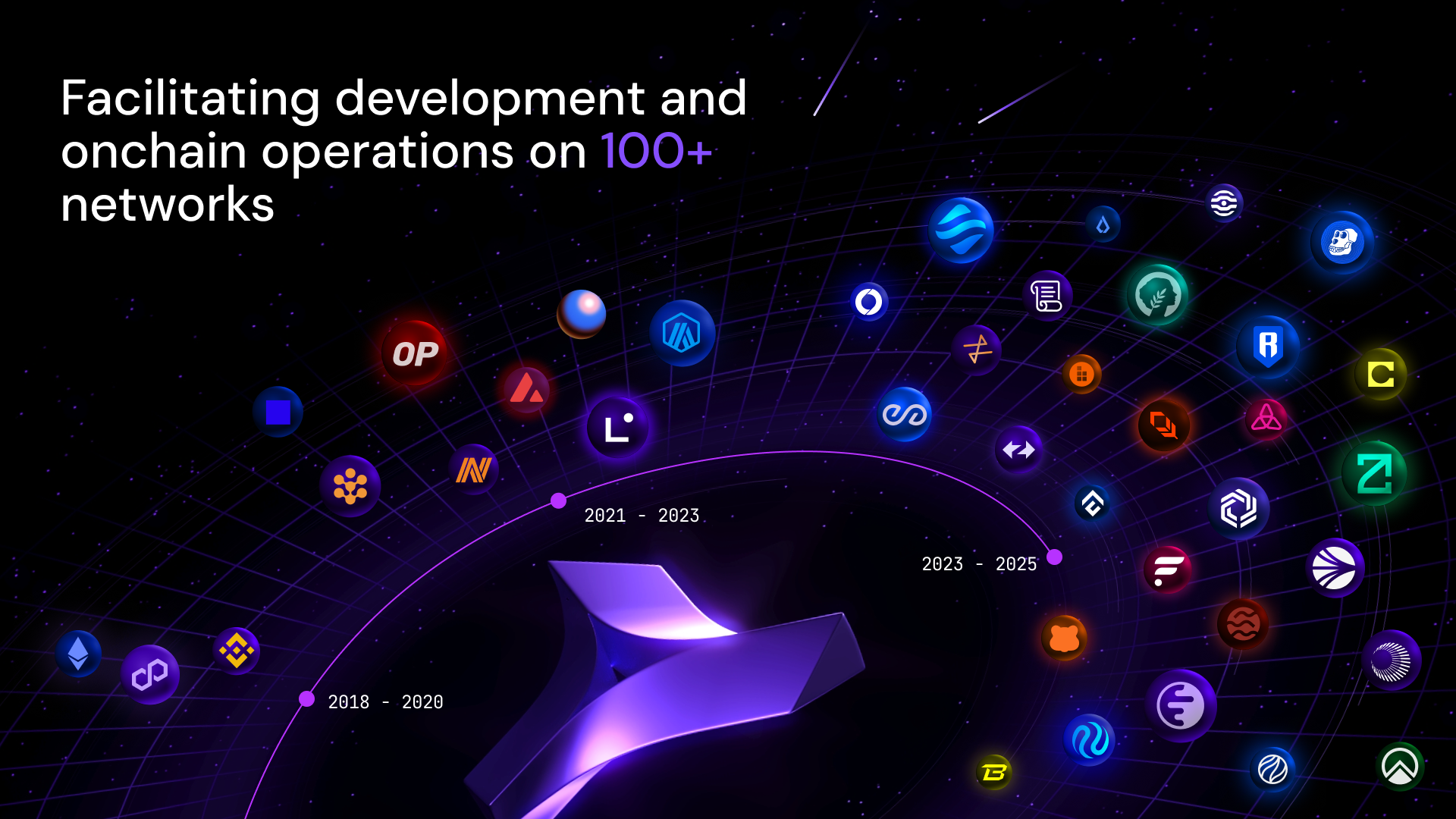
With a clear, transparent integration process and support for both standard and custom EVM implementations, Tenderly has been a key strategic partner and integral provider for both established and up-and-coming chains.
Supporting teams with enterprise-grade infrastructure
As Tenderly integrated new chains, it also supported teams building on top of them. Using Tenderly’s essential tools and infrastructure across development and production stages, teams have been able to build and ship resilient applications faster while minimizing potential risks and having tools for efficient incident management.
In particular, development, testing, and simulation infrastructure have been critical in facilitating new deployments and ensuring proper execution in production.
1. Safer deployments to new chains
As a flagship development and testing infrastructure, Virtual TestNets entered the tech stack of every major DeFi team. Synced with the most recent state of production chains, Virtual TestNets allow teams to set up realistic development, testing, and staging environments. To support Web3 teams across development workflows, Tenderly shipped numerous functionalities and features on Virtual TestNets, including:
- Industry-first faucet for yield-bearing test tokens
- Predictable RPC URL names for faster and easier CI/CD testing
- Cheatcodes for manipulating environment states in the Dashboard
- Evaluating complex expressions on Virtual TestNets
- Searchable transactions on Virtual TestNets
- Virtual TestNet API
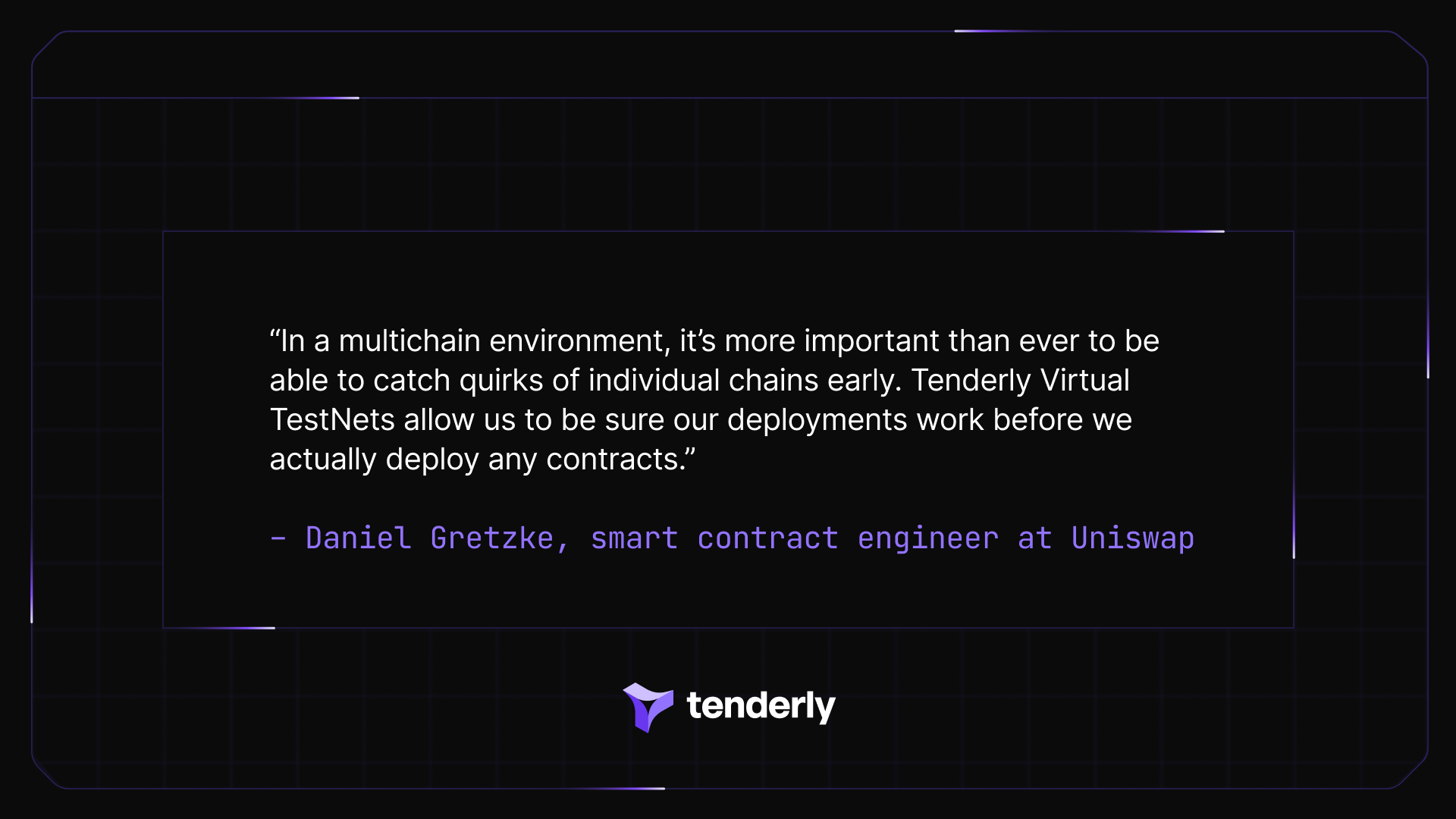
This way, teams can test their deployments and contract execution under realistic conditions, catch potential errors early, and deploy to production with confidence. For instance, the Uniswap team has more confident deployments to chains with custom implementations thanks to Virtual TestNets. Since Virtual TestNets fully replicate production networks along with their custom opcodes, Uniswap can ensure contract deployments work as expected as they expand to new chains.
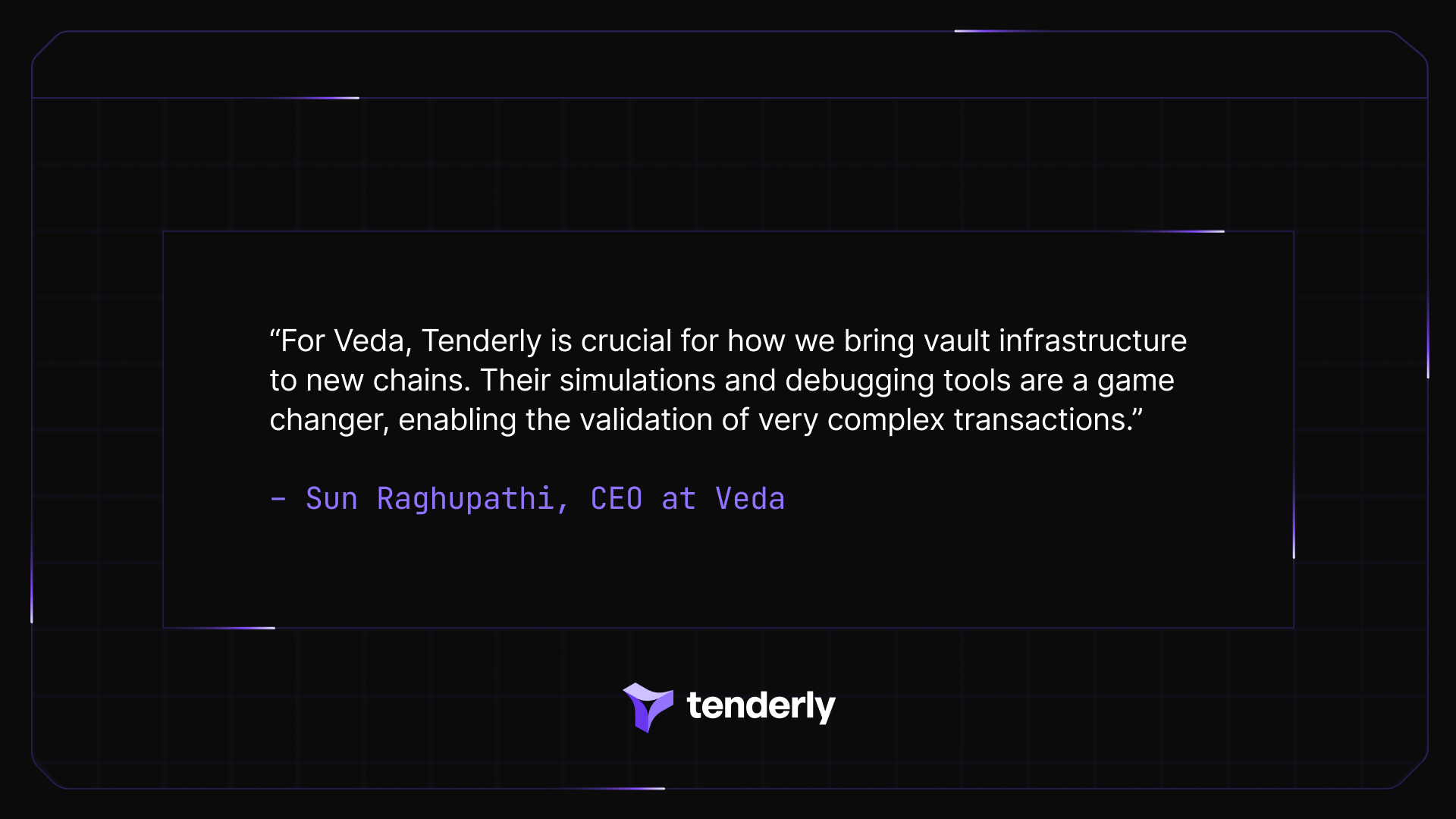
Additionally, Tenderly’s industry-recognized simulation infrastructure and debugging tools are a critical component of every Web3 stack, allowing teams to validate and troubleshoot even the most complex executions. For this reason, for Veda and many other DeFi teams, Tenderly’s development infrastructure and tools are a prerequisite for deploying to new chains.
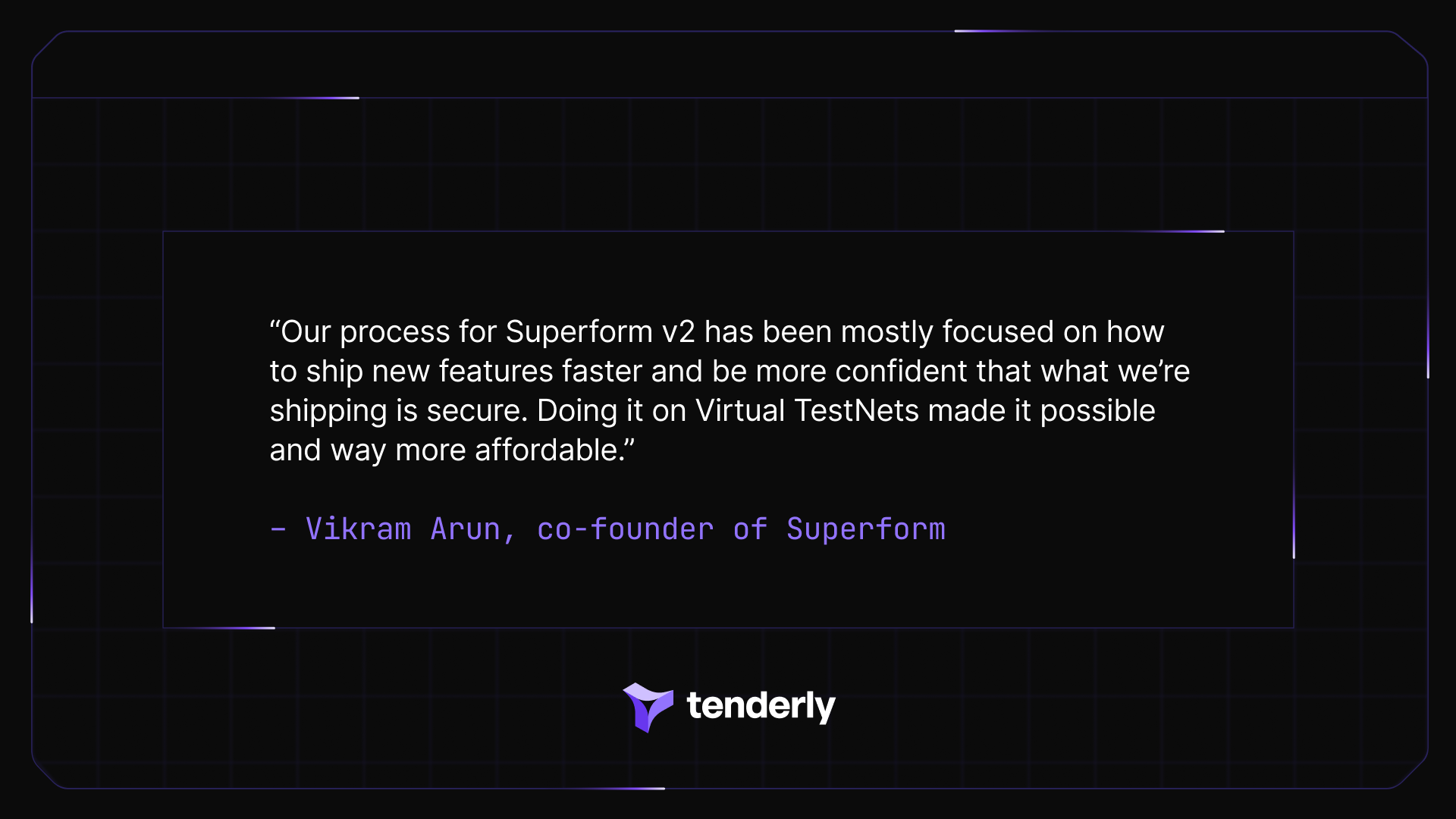
When launching the V2 of their protocol, the Superform team also relied on Virtual TestNets to build SuperVaults with up-to-date oracle prices. By running end-to-end tests with complete third-party contracts, the team was able to validate protocol execution and ship the new version faster without compromising security.
2. Faster, more confident development and testing
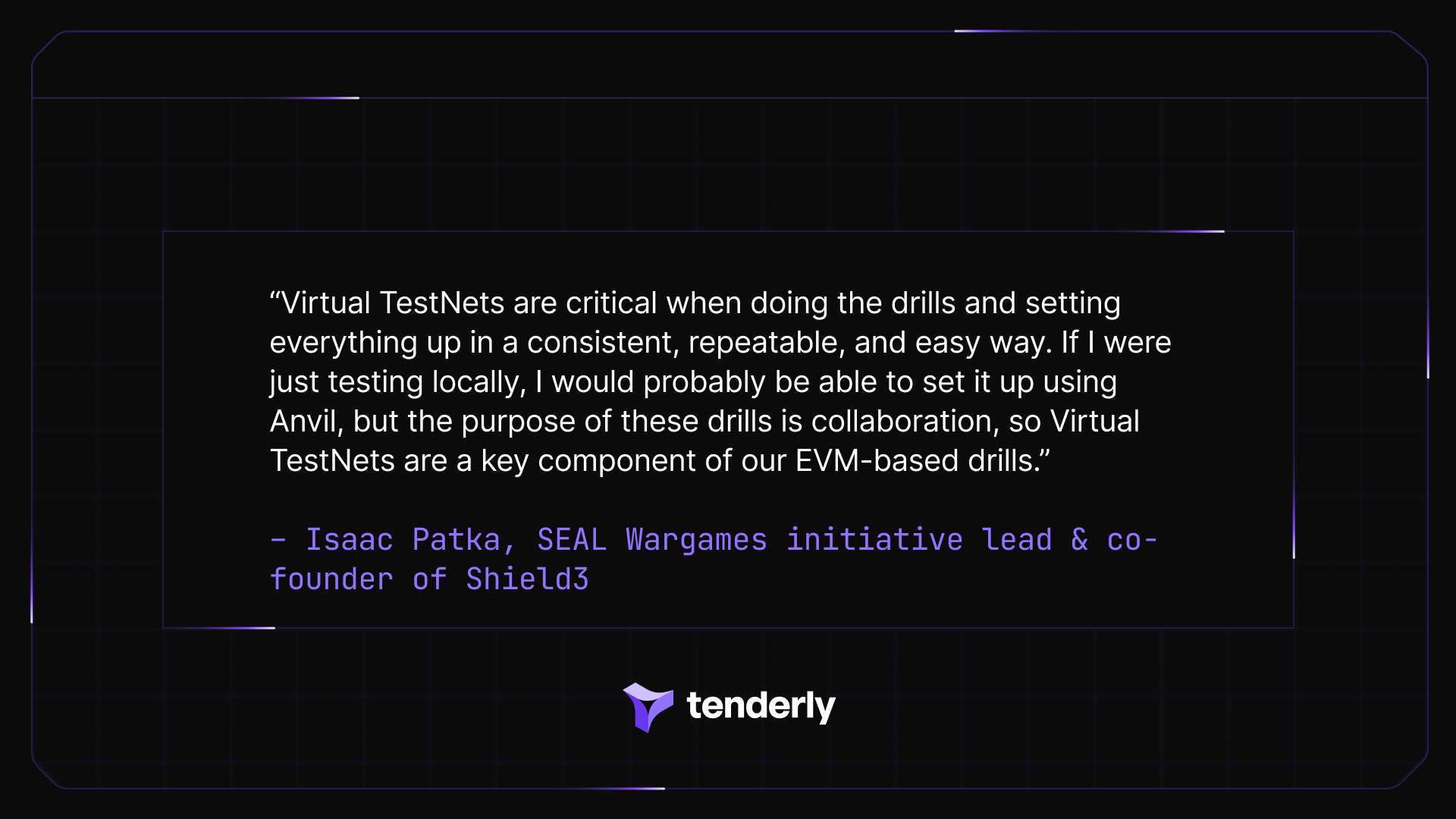
Virtual TestNets have also unlocked cross-chain testing capabilities that were previously unavailable. For instance, Security Alliance (SEAL) runs cross-chain emergency drills on Virtual TestNets that replicate L1-to-L2 message sending. Aside from enabling the team to run realistic simulated attacks, Virtual TestNets also recreate the same environment that protocol teams already use in their everyday workflows.
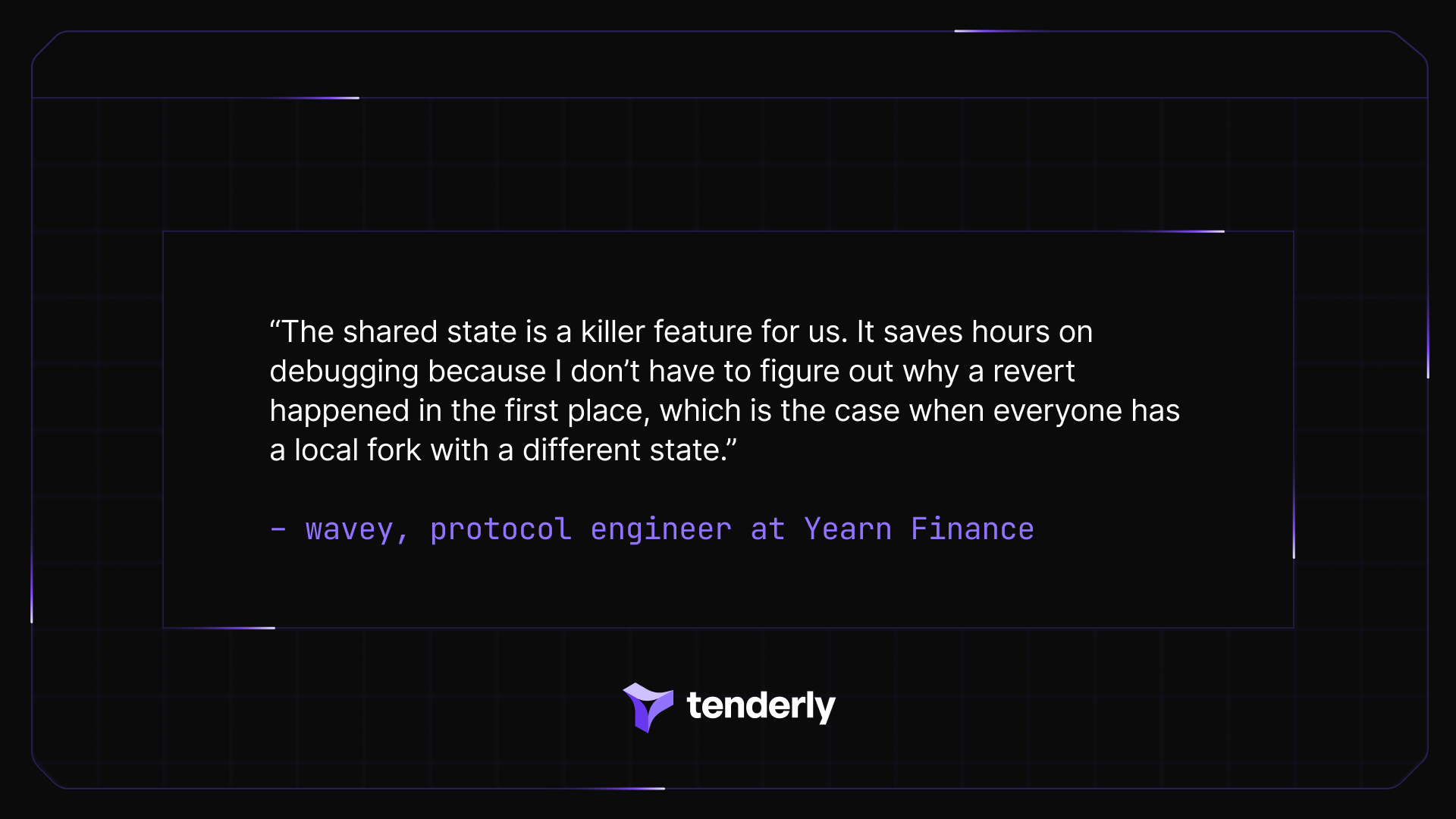
Additionally, the Yearn Finance engineering team simulates and tests complex yield strategies on Virtual TestNets, ensuring faster, collaborative development and debugging in a shared, consistent environment.
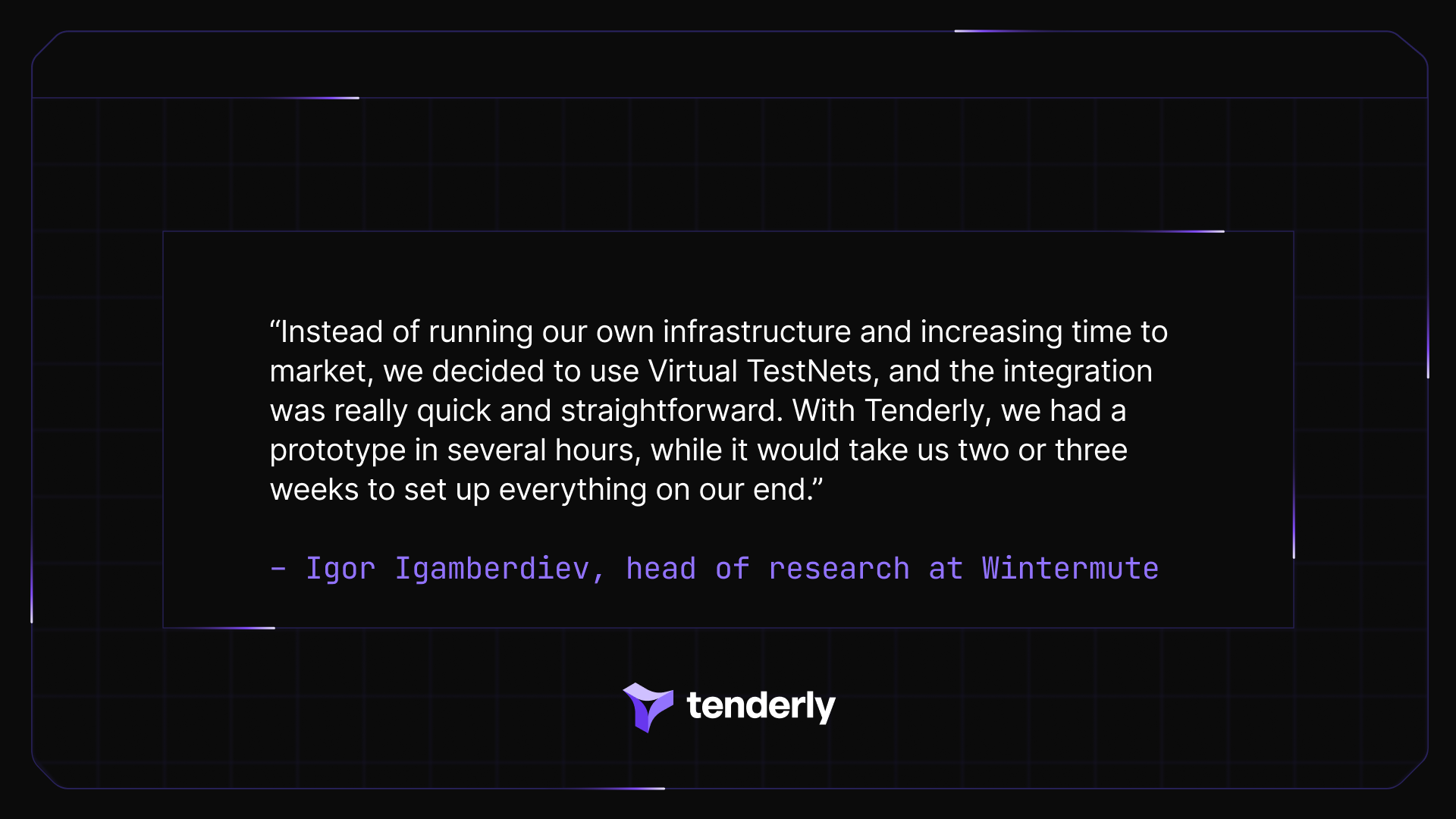
Aside from using Virtual TestNets in their internal development workflows, teams also set up risk-free sandbox environments for public use. For instance, Wintermute ran the Alpha Challenge 2025 on 2800+ Virtual TestNets, enabling participants to solve trading challenges in safe environments.
3. Reliable infrastructure and partner support
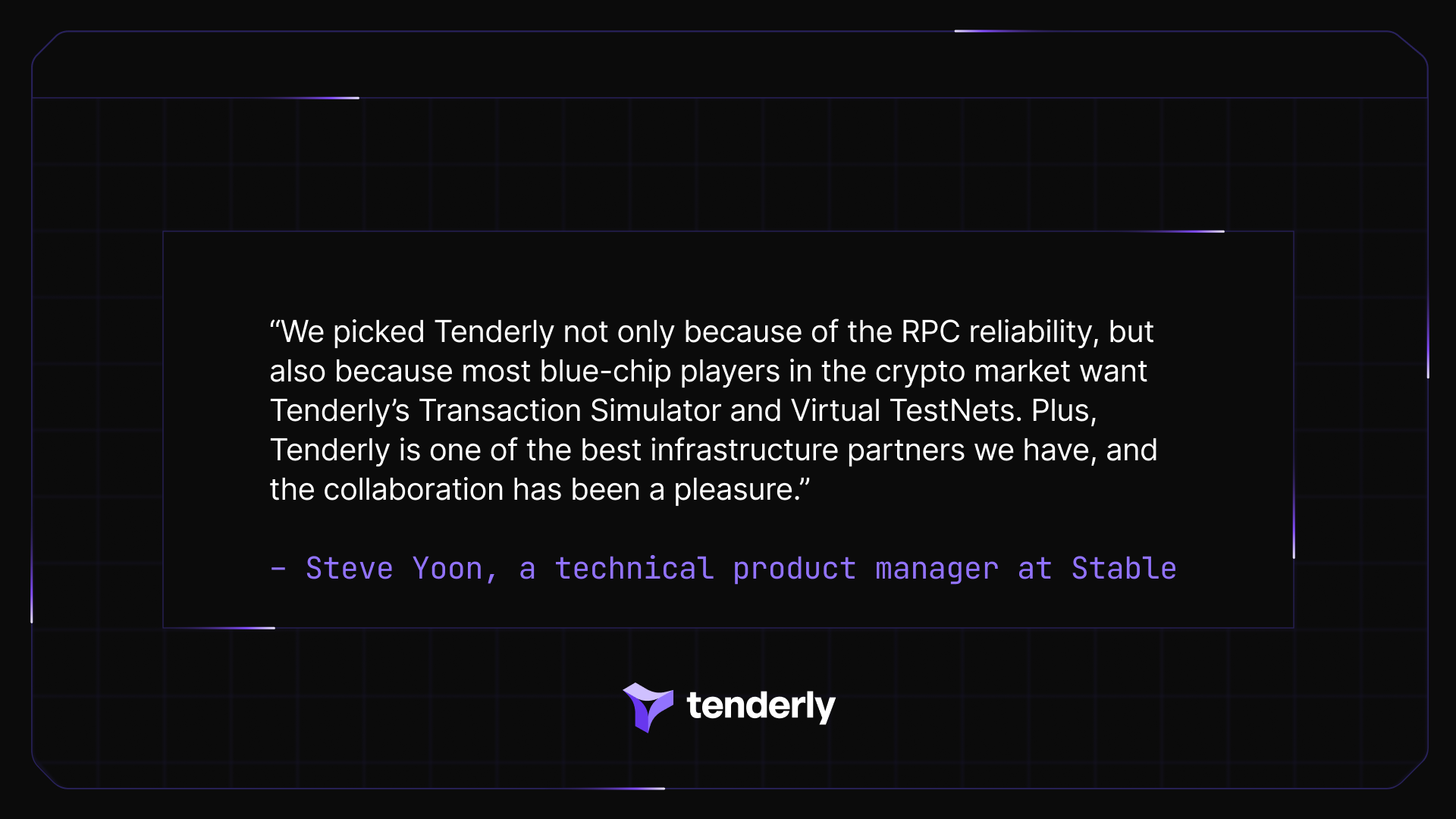
Providing enterprise-grade production infrastructure, Tenderly has also supported teams in scaling their operations and ensuring reliability in production. For this reason, Tenderly has been a prerequisite for deployments on the Stable Network, with many teams requesting Node RPC, Transaction Simulator, and Virtual TestNets.
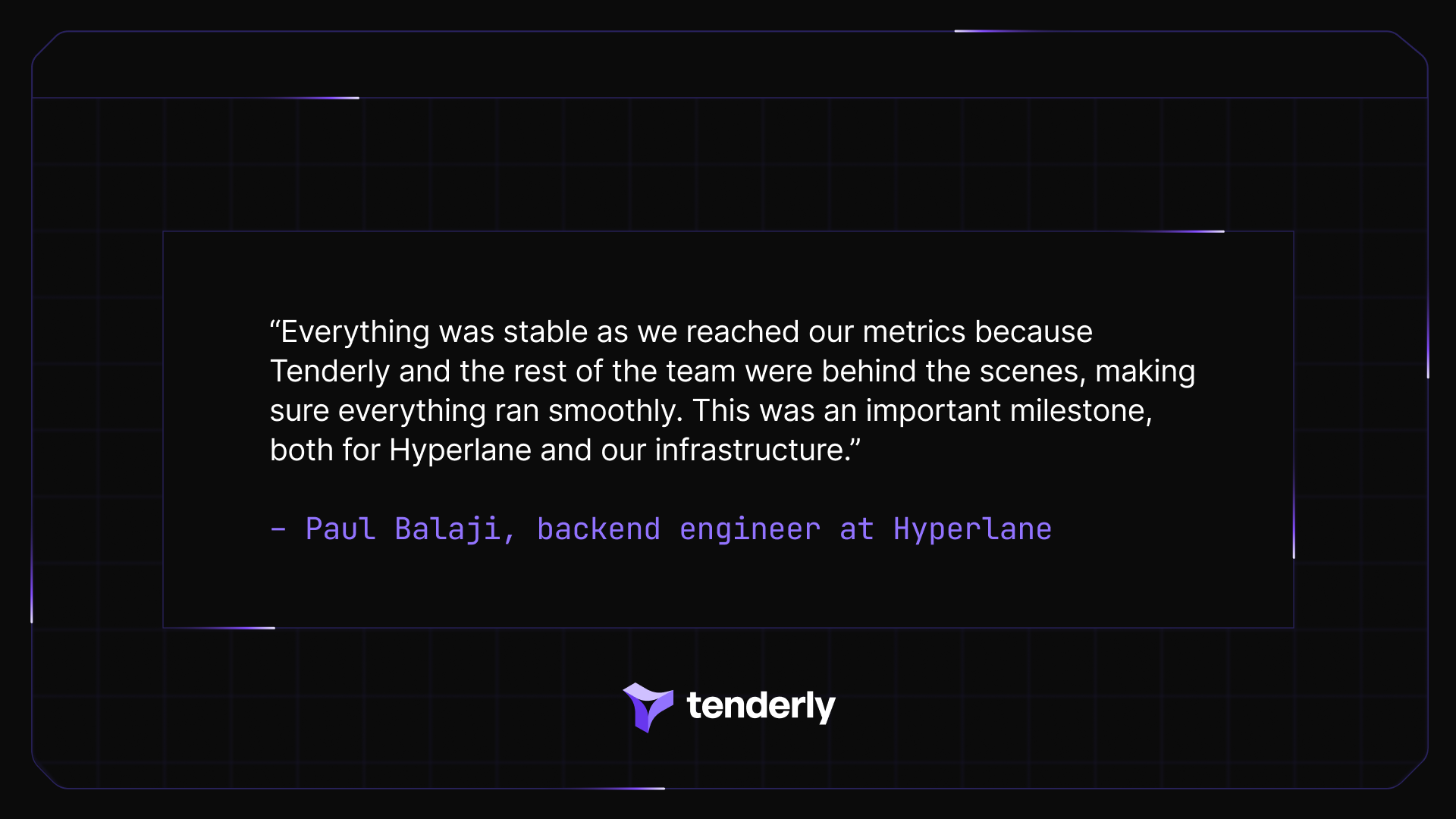
As an interoperability protocol, Hyperlane also integrated Node RPC for 23 networks and relied on Tenderly during the HYPER Airdrop. Thanks to high RPC reliability and performance and the team’s ongoing support, Hyperlane processed 50K+ transactions without any downtime.
4. Improved developer experience
With Tenderly’s debugging and exploration tools being essential for improved developer experience onchain, Tenderly also shipped multiple explorer functionalities in 2025:
- Enhanced transaction exploration experience
- Multichain address portfolios
- Granular insights into digital assets
- Top tokens and NFTs, as well as token holders
- Read, write, and simulate functionalities directly in the explorer
- Blob data exploration and analysis across chains
Recognizing the importance of building excellent developer and user experiences onchain, peaq white-labeled Tenderly Explorer, launching it as their public block explorer with built-in developer tools.
Entering 2026: infrastructure partner for managing chain operations
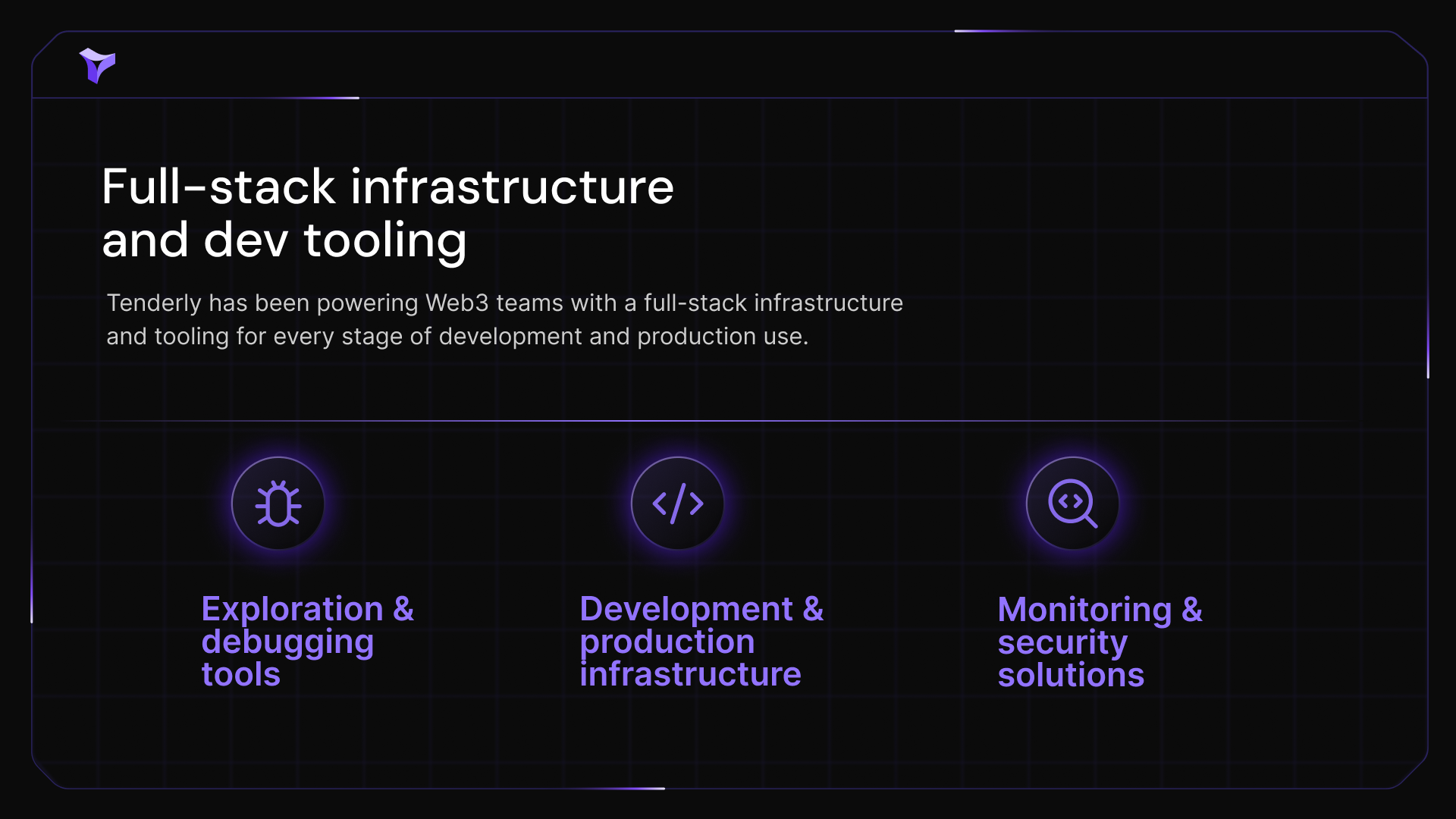
Over the years, Tenderly’s product has expanded to cover each stage of development and onchain operations. It now offers full-stack infrastructure and tools for more efficient team development, proactive security measures, and critical incident management under one unified platform.
This year has further strengthened Tenderly’s position as a leading partner for EVM chains and DeFi protocols. Working at the forefront of the industry with innovators bringing us closer to a global economy and borderless finance, we have unique insights into managing blockchain infrastructure at scale while meeting the everyday needs of developers building on top of it.
As we enter the next chapter for blockchain technology, Tenderly will continue to enable teams through unified solutions for blockchain operations (ChainOps), with in-depth insights into blockchain performance, critical solutions for risk management, and accessible tools for more confident development.
Moving toward a unified ChainOps platform, Tenderly aims to pair critical infrastructural components with the operational efficiency needed to scale financial systems as they reach global markets. Through a unified ChainOps dashboard, you will have everything you need for:
- Monitoring your chain performance and analyzing its usage and costs in real time to ensure everything works as expected.
- Risk management and mitigation with automated alerting and incident responses to react quickly in the event of critical failures.
- Safe, realistic development and testing on top of a simulation infrastructure that replicates your network to ensure confident deployments and risk-free payments.
- A complete registry of your integrations, third-party protocols, relevant wallet and contract addresses, offchain components, and other essential assets.
Building the future of the internet together
With blockchain technology reaching the next stage of maturity, this year marked the beginning of its global adoption. The critical infrastructure for borderless payments is already in place: EVM technology that can process global transactions at scale, well-defined use cases for onchain applications, and digital assets meeting new demand.
As the underlying infrastructure supporting networks and teams alike, Tenderly has gained first-hand insights into the requirements for and challenges of scaling blockchain solutions. Going forward, Tenderly will continue to deliver products designed to remove the obstacles you face as you build the future of the borderless economy.